Demonstrated exacerbation reduction in pivotal studies. XALOC-1 and ZEPHYR 2 exacerbation rates in various eosinophil cohorts displayed below.

XALOC-1 is the largest ex-US, retrospective study to investigate the real-world effectiveness of FASENRA for severe eosinophilic asthma1,2

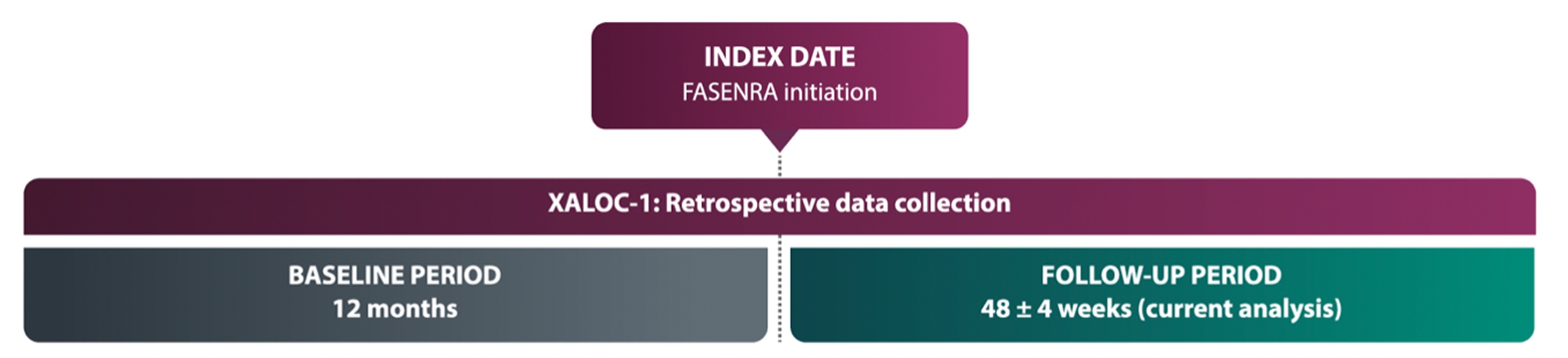
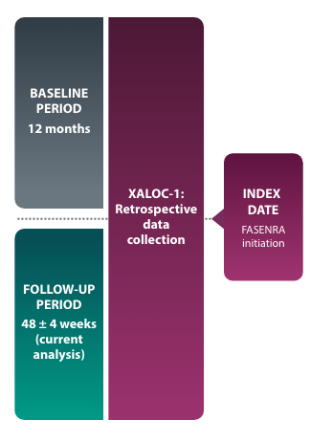
Exacerbation rates were assessed at baseline (12 months pre-index) and after FASENRA initiation at Week 48 ± 4 weeks.

XALOC-1 Study: Changes in AER based on baseline blood eosinophil levels*1,2

Graph Representing Changes in AER based on baseline blood eosinophil levels

Note: Baseline blood eosinophil count is the peak blood eosinophil count during the 12-month baseline period prior to the index date.

Overall Population (N=853):

83% reduction in AER at Week 48 (0.53) vs baseline (3.05)

Results are descriptive only. Clinical implications cannot be determined from these data.

Study Limitations

  • This was a retrospective study that lacked a control arm
  • Patients received FASENRA according to local labels and routine clinical practice outside of the United States, which may limit the generalizability of the results

This integrated analysis included adults (≥18 years) with SEA who received FASENRA as defined in each national study and who had available follow-up data of ≥3 months from the index date. Patients were excluded if they were receiving FASENRA or any other biologic for the treatment of asthma in a clinical trial at the time of enrollment; previous treatment with all other biologic therapies for asthma was allowed. Patients received FASENRA according to approved local labels and routine clinical practice. This XALOC-1 integrated analysis includes data from 5 individual studies from Canada (VOLTS), Italy (ANANKE), Portugal (BETREAT), Spain (ORBE II), and the UK (BPAP).

This index date was the date FASENRA was started, the baseline period was the 12 months prior to the index date, and the follow-up period was from the index date up to 48 ± 4 weeks.

Flowchart Showing XALOC-1 Study Data Collection

Primary Outcomes

AERs were evaluated over 48 weeks before and after treatment initiation and analyzed based on overall population and baseline subgroup characteristics.

Baseline Characteristics

  • Total number of patients: 1002
  • Mean age at asthma diagnosis: 38.2 years
  • Positive atopic status*: 43.8%
  • Concomitant CRSwNP*: 31.5%
  • FeNO, mean: 55.2 PPB
  • Maintenance OCS use during 12-month baseline period: 53.1%*
  • Peak bEOS during baseline period, median: 510 cells/µL
  • AER during 12-month baseline period, mean: 3.05

Study Limitations

  • This is a retrospective, observational, real-world study program; clinical implications cannot be determined from these data. Results are descriptive only
  • Lack of a control arm
  • Analyses were restricted to data available in routine clinical practice

*Percentage of total number of patients, which includes missing n=346 (34.5%) for age at asthma diagnosis, n=9 (0.9%) for maintenance OCS use (missing or unknown) in the 12-month baseline period, n=369 (36.8%) for atopic status, and n=6 (0.6%) for CRSwNP.

Based on medical records available at the index date.

The most recent measurement in the 12-month baseline period.

AER, annual exacerbation rate; bEOS, blood eosinophil; CRSwNP, chronic rhinosinusitis with nasal polyps; FeNO, fractional exhaled nitric oxide; OCS, oral corticosteroid; PPB, parts per billion; SEA, severe eosinophilic asthma.

ZEPHYR 2 is one of the largest real-world studies in respiratory biologics3

The ZEPHYR 2 REAL-WORLD STUDY assessed the effectiveness of FASENRA on asthma exacerbations and OCS use in subsets of patients that included those with different blood eosinophil counts (ranging from <150 to ≥300 cells/μL) and those who had switched from other respiratory biologics.3

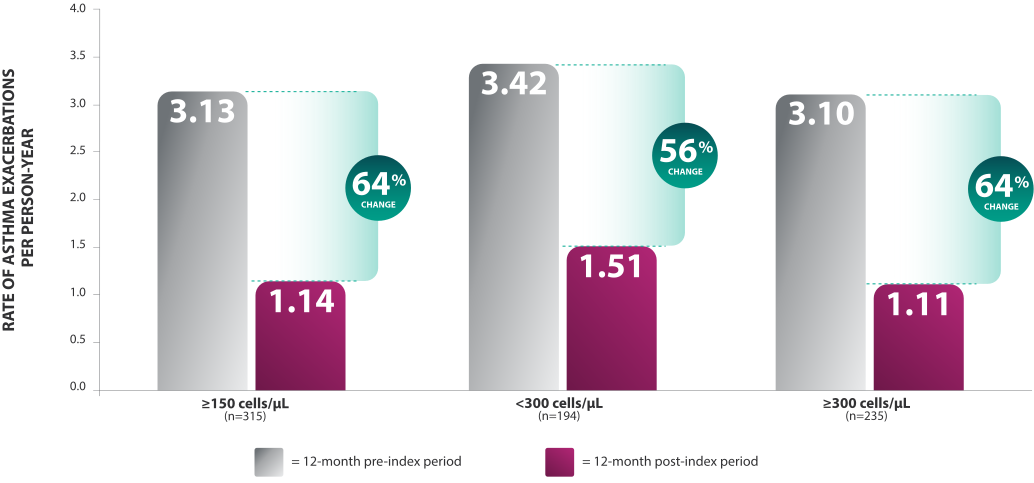
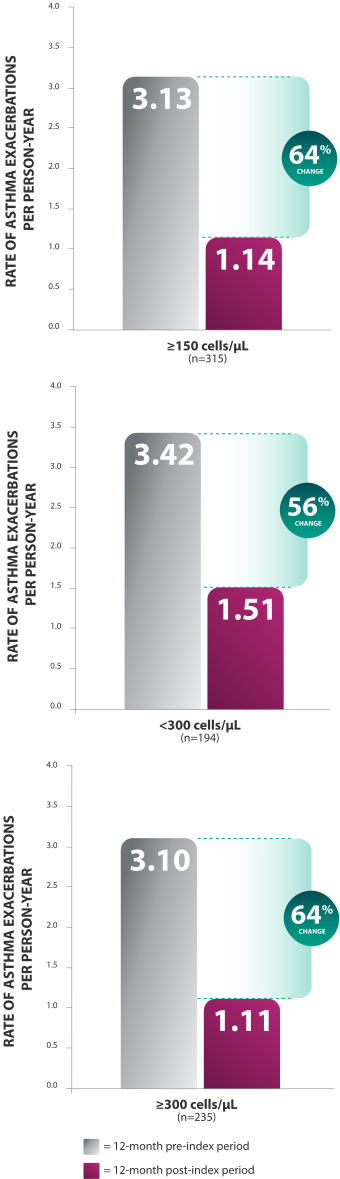
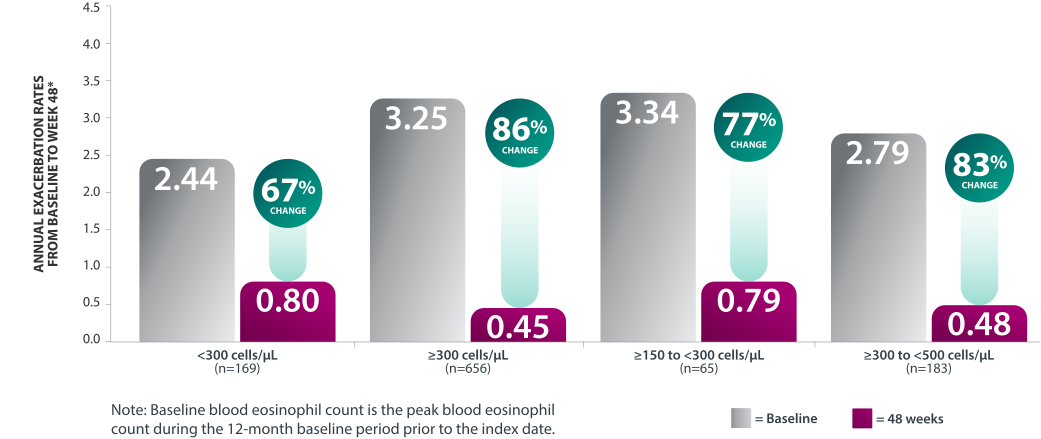
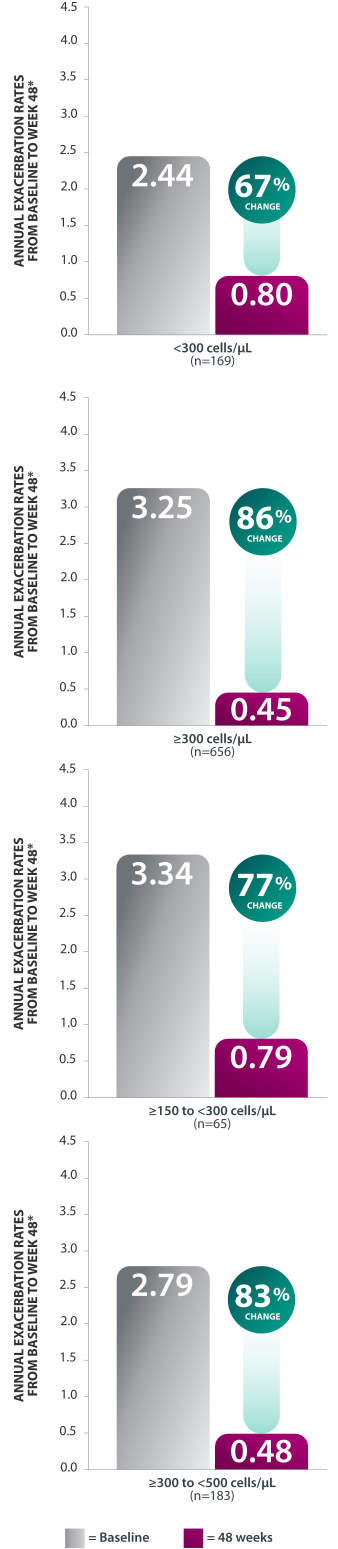
Exacerbation rates across blood eosinophil counts3

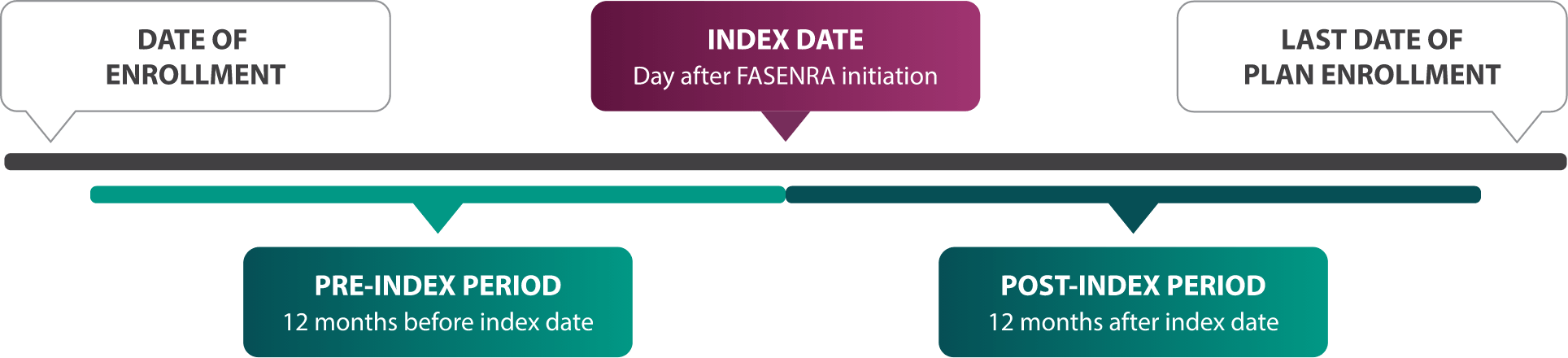
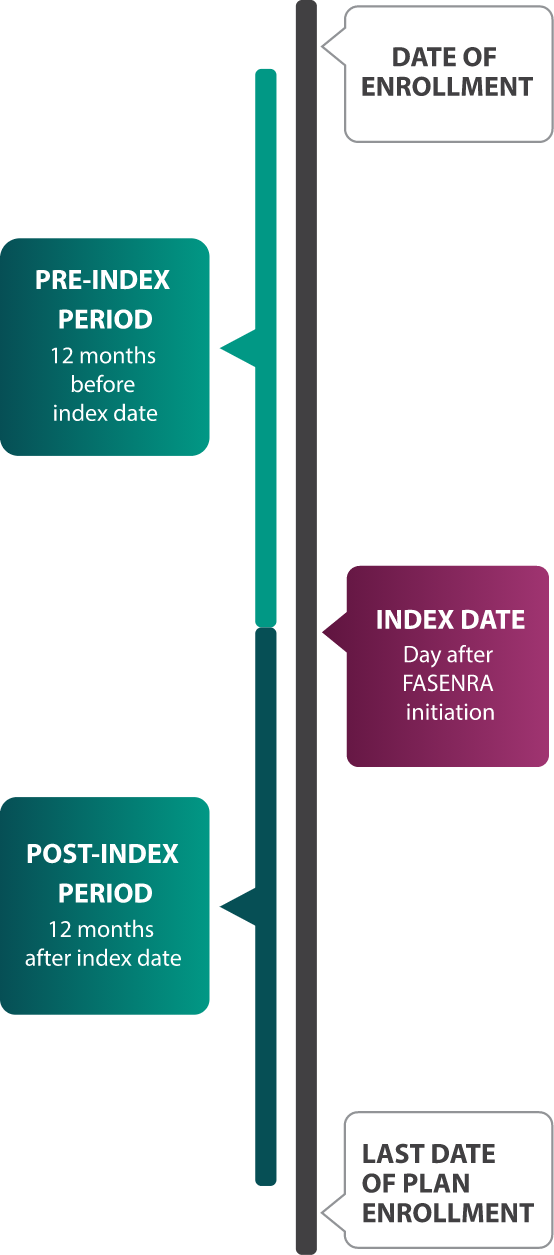
IN THIS RETROSPECTIVE STUDY, EXACERBATION RATES WERE COMPARED BETWEEN 12-MONTH PRE-INDEX AND POST-INDEX PERIODS

EOSINOPHIL COHORTS

Chart Representing Exacerbation Rates Across Blood Eosinophil Counts

The observed reduction in annual exacerbation rates was similar to rates seen in the pivotal trial, SIROCCO.4,5

This is an observational study; clinical implications cannot be determined from this payer database study.

Results are descriptive only.

A pre-post design was implemented to descriptively analyze and compare asthma exacerbations, OCS use, and other outcomes between the 12-month pre-index and 12-month post-index periods. Asthma exacerbations were defined based on a combination of asthma exacerbation diagnosis codes in the inpatient, emergency, and outpatient settings along with records for systemic corticosteroid use. Eligible patients initiating FASENRA (N=8473) were diagnosed with asthma, aged ≥12 years at index, had 24 months of continuous insurance enrollment, and had ≥2 asthma exacerbations in the pre-index period.

This study consisted of 3 non-mutually exclusive cohorts. Patients in the first cohort (n=429) had ≥2 records of FASENRA during the follow-up period and were stratified based on ≥1 blood eosinophil count value during the pre-index period. Patients in the second cohort (n=349) had ≥2 records of FASENRA during the follow-up period and were stratified into 2 mutually exclusive subgroups based on ≥1 record of mepolizumab or omalizumab use during the pre-index period with no other biologic use during the post-index period. The third cohort was an extended follow-up of 1042 patients stratified into 2 subgroups. Subgroup 1 comprised patients with ≥18 months of follow-up post index with at least 1 claim between 18-24 months and ≥9 records of FASENRA during the follow-up period. Subgroup 2 comprised patients with ≥24 months of follow-up post index with at least 1 claim between 24-30 months and ≥11 records of FASENRA during the follow-up period.

Study Limitations

  • The study evaluated the treatment effect of FASENRA using a pre–post study design and did not include a control arm to adjust for potential temporal changes not due to treatment
  • It is possible that some patients received their first FASENRA dose as a free dose that was not visible in the payer data
  • This is an observational study; clinical implications cannot be determined from this payer database study
Flowchart Representing the ZEPHYR 2 Cohort Study Data Period

Real-World Study Objective

To assess real-world effectiveness of FASENRA on asthma exacerbations and OCS use in subsets of patients that included those with different blood eosinophil counts (ranging from <150 to ≥300 cells/µL) and those who had switched from other respiratory biologics.

Eligibility Requirements

  • Diagnosed with asthma
  • Aged ≥12 years at index
  • Had 24 months of continuous insurance enrollment
  • Experienced ≥2 asthma exacerbations in the pre-index period

Many Patients in ZEPHYR 2 Had Comorbidities

Some common comorbidities in the cohorts were allergic rhinitis, hypertension, gastroesophageal reflux disease, hyperlipidemia, COPD, obesity, and nasal polyps.

COPD, chronic obstructive pulmonary disease; OCS, oral corticosteroid.

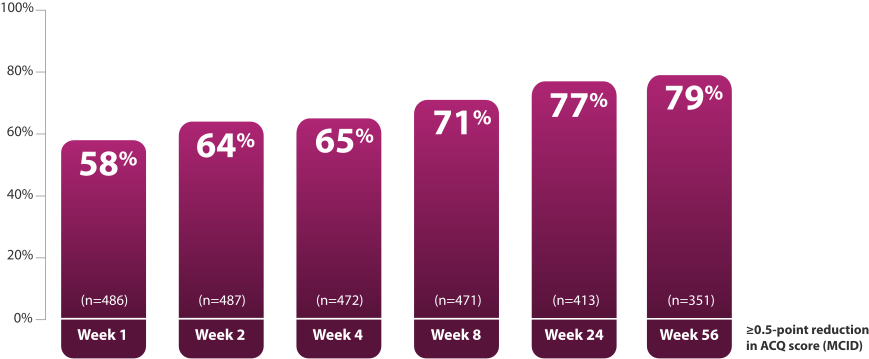
ACQ: Pivotal trial results and XALOC-2 real-world study data

Results from the pivotal trials: In SIROCCO, a 60% responder rate in ACQ-6 was observed with FASENRA vs 50% for placebo (OR 1.55; 95% CI: 1.09, 2.19). In CALIMA, the ACQ-6 responder rate for FASENRA was 63% vs 59% for placebo (OR 1.16; 95% CI: 0.80, 1.68).4

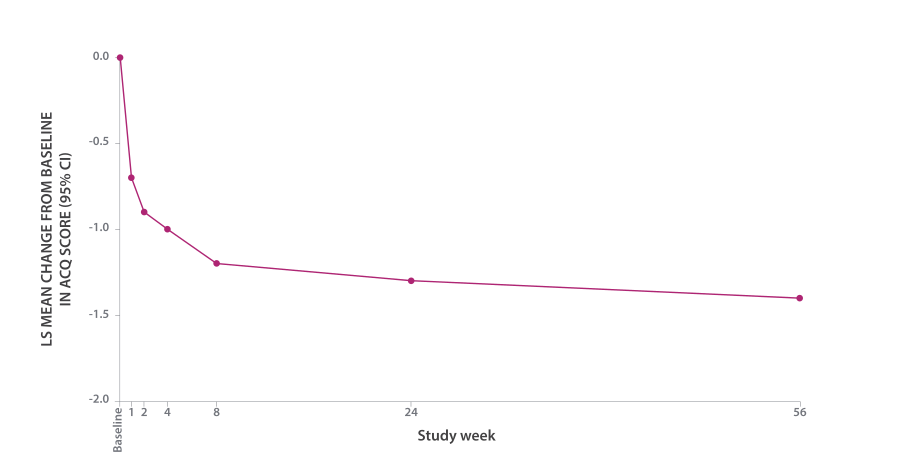
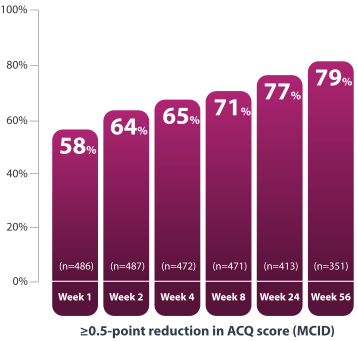
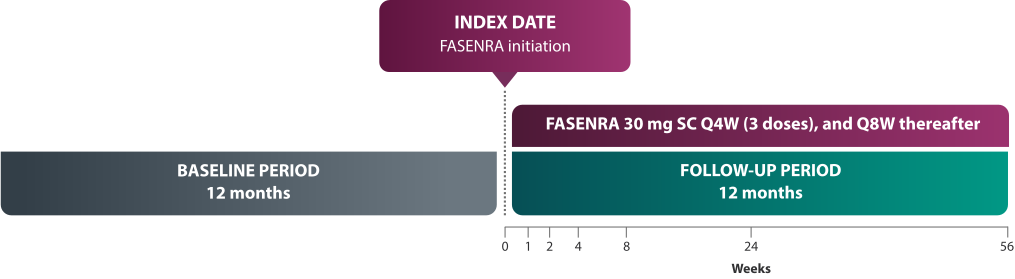
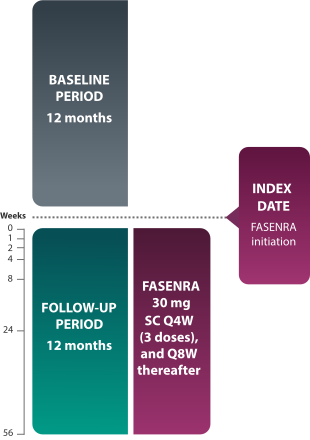
XALOC-2 is a single-arm, prospective, observational, real-world, ex-US program that investigated adults with severe eosinophilic asthma receiving FASENRA over 56 weeks. Changes in ACQ score rates were assessed at baseline (Week 0) and Weeks 1, 2, 4, 8, 24, and 56 post-FASENRA initiation.6

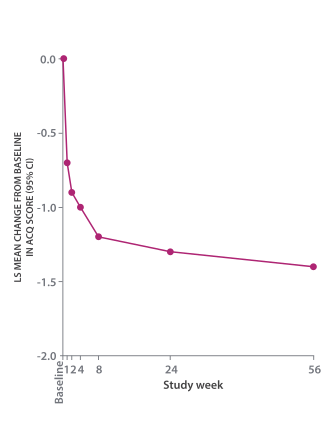
XALOC-2: ACQ score change from Week 1 to 56 compared to baseline in patients with severe eosinophilic asthma‡6

Graph Representing ACQ Score Drop in PatientsGraph Representing ACQ Score Drop in Patients

Results are descriptive only. Clinical implications cannot be determined from these data.

Change in LSM ACQ score from baseline median (IQR) ACQ score: 3.0 (2.2-3.8); n=535. LS mean change from baseline: -0.7 at Week 1 and -1.4 at Week 56.6


Study Limitations6:

  • The study lacked a control arm
  • Patients received FASENRA according to local labels and routine clinical practice outside of the United States, which may limit the generalizability of the results

ACQ scores from Weeks 1 to 56 in a real-world study (ACQ scores were assessed at Weeks 1, 2, 4, 8, 24, and 56)

Flowchart Representing ACQ Scores from Weeks 1 To 56 In A Real-World Study

Outcome Measures

ACQ-5 or ACQ-6 scores were evaluated at baseline (Week 0) and after FASENRA initiation and were collected during routine clinical visits or electronically at Weeks 1, 2, 4, 8, 24, and 56.*

Select Baseline Patient Characteristics

  • Total number of patients: 535
  • Median age at FASENRA initiation: 58 years
  • Maintenance OCS use (n=315): 59%§
  • AER, median (IQR): 2.0 (1.0-4.0)§
  • ACQ score, mean (SD): 3.0 (1.2)*

Study Limitations

  • Clinical implications cannot be determined from these data. Results are descriptive only
  • Lack of control arm
  • Analyses were restricted to data available in routine clinical practice outside of the United States

*The ACQ score includes both ACQ-6 scores, based on an average of 6 items in Canada (POWER), Belgium (BE-REAL), and Germany (imPROve) and ACQ-5 scores, based on an average of 5 items in Switzerland (BEEPS).

In the Swiss cohort, patients were assessed at Week 16, instead of at Week 24.

The N number represents the total number of patients recruited from each country (POWER, Canada; n=142; BE-REAL, Belgium; n=76; imPROve, Germany, n=244; BEEPS, Switzerland, n=73).

§During the 12 months prior to baseline (Week 0).


ACQ, Asthma Control Questionnaire; AER, annual exacerbation rate; IQR, interquartile range; OCS, oral corticosteroid; Q4W, every 4 weeks; Q8W, every 8 weeks; SC, subcutaneous; SD, standard deviation.

Hear a colleague discuss the ZEPHYR 2 real-world evidence study

*Baseline blood eosinophil count was the peak blood eosinophil count during the 12-month baseline period prior to the index date.1

AERs and corresponding 95% CIs were calculated for the 12-month baseline period and the follow-up period using generalized linear regression with a negative binomial distribution among patients treated with benralizumab who either discontinued before Week 48 or completed 48 ± 4 weeks of follow-up from the index date.1

The ACQ score included both ACQ-6 scores, based on an average of 6 items in Canada (POWER), Belgium (BE-REAL), and Germany (imPROve) and ACQ-5 scores, based on an average of 5 items in Switzerland (BEEPS).6

ACQ, Asthma Control Questionnaire; AER, annual exacerbation rate; bEOS, blood eosinophil; CI, confidence interval; LS, least squares; MCID, minimal clinically important difference; OCS, oral corticosteroid; OR, odds ratio.

IMPORTANT SAFETY INFORMATION -

CONTRAINDICATIONS

Known hypersensitivity to benralizumab or excipients.

WARNINGS AND PRECAUTIONS

Hypersensitivity Reactions

Hypersensitivity reactions (eg, anaphylaxis, angioedema, urticaria, rash) have occurred after administration of FASENRA. These reactions generally occur within hours of administration, but in some instances have a delayed onset (ie, days). Discontinue in the event of a hypersensitivity reaction.

Acute Asthma Symptoms or Deteriorating Disease

FASENRA should not be used to treat acute asthma symptoms, acute exacerbations, or acute bronchospasm.

Reduction of Corticosteroid Dosage

Do not discontinue systemic or inhaled corticosteroids abruptly upon initiation of therapy with FASENRA. Reductions in corticosteroid dose, if appropriate, should be gradual and performed under the direct supervision of a physician. Reduction in corticosteroid dose may be associated with systemic withdrawal symptoms and/or unmask conditions previously suppressed by systemic corticosteroid therapy.

Parasitic (Helminth) Infection

It is unknown if FASENRA will influence a patient’s response against helminth infections. Treat patients with pre-existing helminth infections before initiating therapy with FASENRA. If patients become infected while receiving FASENRA and do not respond to anti-helminth treatment, discontinue FASENRA until infection resolves.

ADVERSE REACTIONS

The most common adverse reactions (incidence ≥ 5%):

  • Asthma: headache, pharyngitis
  • EGPA: headache
  • HES: headache, hypersensitivity reactions, influenza-like illness

Injection site reactions (eg, pain, erythema, pruritus, papule) occurred at a rate of 2.2% in patients treated with FASENRA compared with 1.9% in patients treated with placebo in asthma exacerbation studies.

USE IN SPECIFIC POPULATIONS

A pregnancy exposure registry monitors pregnancy outcomes in women exposed to FASENRA during pregnancy. To enroll call 1-877-311-8972 or visit www.mothertobaby.org/fasenra.

The data on pregnancy exposure from the clinical trials are insufficient to inform on drug-associated risk. Monoclonal antibodies such as benralizumab are transported across the placenta during the third trimester of pregnancy; therefore, potential effects on a fetus are likely to be greater during the third trimester of pregnancy.

INDICATIONS

FASENRA is indicated for:

  • the add-on maintenance treatment of patients with severe asthma aged 6 years and older and with an eosinophilic phenotype. FASENRA is not indicated for the relief of acute bronchospasm or status asthmaticus
  • the treatment of adult patients with eosinophilic granulomatosis with polyangiitis (EGPA)
  • the treatment of adult and adolescent patients aged 12 years and older with hypereosinophilic syndrome (HES) without an identifiable non-hematologic secondary cause

You may report side effects related to AstraZeneca products .

IMPORTANT SAFETY INFORMATION

+

References

Reference

1. Data on File, US-107034, AZPLP. 2. FASENRA® (benralizumab) [package insert]. Wilmington, DE: AstraZeneca Pharmaceuticals LP; 2026. 3. Bleecker ER, FitzGerald JM, Chanez P, et al; SIROCCO study investigators. Efficacy and safety of benralizumab for patients with severe asthma uncontrolled with high-dosage inhaled corticosteroids and long-acting β2-agonists (SIROCCO): a randomised, multicentre, placebo-controlled phase 3 trial. Lancet. 2016;388(10056):2115-2127. 4. FitzGerald JM, Bleecker ER, Nair P, et al; CALIMA study investigators. Benralizumab, an anti-interleukin-5 receptor α monoclonal antibody, as add-on treatment for patients with severe, uncontrolled, eosinophilic asthma (CALIMA): a randomised, double-blind, placebo-controlled phase 3 trial. Lancet. 2016;388(10056):2128-2141.


 

1. Korn S, Bourdin A, Chupp G, et al. Integrated safety and efficacy among patients receiving benralizumab for up to 5 years. J Allergy Clin Immunol Pract. 2021;9(12):4381-4392.e4.

1. FASENRA® (benralizumab) [package insert]. Wilmington, DE: AstraZeneca Pharmaceuticals LP; September 2024. 2. Laviolette M, Gossage DL, Gauvreau G, et al. Effects of benralizumab on airway eosinophils in asthmatic patients with sputum eosinophilia. J Allergy Clin Immunol. 2013;132(5):1086-1096.e5.

1. Data on File, REF-51332, AZPLP. 2. Bleecker ER, FitzGerald JM, Chanez P, et al; SIROCCO study investigators. Efficacy and safety of benralizumab for patients with severe asthma uncontrolled with high-dosage inhaled corticosteroids and long-acting ß2-agonists (SIROCCO): a randomised, multicentre, placebo-controlled phase 3 trial. Lancet. 2016;388(10056):2115-2127. 3. Skolnik NS, Carnahan SP. Primary care of asthma: new options for severe eosinophilic asthma. Curr Med Res Opin. 2019;35(7):1309-1318. 4. Tran TN, Zeiger RS, Peters SP, et al. Overlap of atopic, eosinophilic, and TH2-high asthma phenotypes in a general population with current asthma. Ann Allergy Asthma Immunol. 2016;116(1):37-42.

1. FASENRA® (benralizumab) [package insert]. Wilmington, DE: AstraZeneca Pharmaceuticals LP; September 2024. 2. Bleecker ER, FitzGerald JM, Chanez P, et al; SIROCCO study investigators. Efficacy and safety of benralizumab for patients with severe asthma uncontrolled with high-dosage inhaled corticosteroids and long-acting ß2-agonists (SIROCCO): a randomised, multicentre, placebo-controlled phase 3 trial. Lancet. 2016;388(10056):2115-2127. 3. FitzGerald JM, Bleecker ER, Nair P, et al; CALIMA study investigators. Benralizumab, an anti-interleukin-5 receptor α monoclonal antibody, as add-on treatment for patients with severe, uncontrolled, eosinophilic asthma (CALIMA): a randomised, double-blind, placebo-controlled phase 3 trial. Lancet. 2016;388(10056):2128-2141. 4. Chipps BE, Newbold P, Hirsch I, Trudo F, Goldman M. Benralizumab efficacy by atopy status and serum immunoglobulin E for patients with severe, uncontrolled asthma. Ann Allergy Asthma Immunol. 2018;120(5):504-511.e4.

1. FASENRA® (benralizumab) [package insert]. Wilmington, DE: AstraZeneca Pharmaceuticals LP; September 2024. 2. Nair P, Wenzel S, Rabe KF, et al. Oral glucocorticoid–sparing effect of benralizumab in severe asthma. N Engl J Med. 2017;376(25):2448-2458. 3. Menzies-Gow A, Corren J, Bel EH, et al. Corticosteroid tapering with benralizumab treatment for eosinophilic asthma: PONENTE trial. ERJ Open Res. 2019;5(3):00009-2019. 4. Menzies-Gow A, Gurnell M, Heaney LG, et al. Oral corticosteroid elimination via a personalised reduction algorithm in adults with severe, eosinophilic asthma treated with benralizumab (PONENTE): a multicentre, open-label, single-arm study. Lancet Respir Med. 2022;10(1):47-58. 5. Menzies-Gow A, Gurnell M, Heaney LG, et al. Adrenal function recovery after durable oral corticosteroid sparing with benralizumab in the PONENTE study. Eur Respir J. 2022;60(6):2103226.

1. FASENRA® (benralizumab) [package insert]. Wilmington, DE: AstraZeneca Pharmaceuticals LP; September 2024. 2. Bleecker ER, FitzGerald JM, Chanez P, et al; SIROCCO study investigators. Efficacy and safety of benralizumab for patients with severe asthma uncontrolled with high-dosage inhaled corticosteroids and long-acting ß2-agonists (SIROCCO): a randomised, multicentre, placebo-controlled phase 3 trial. Lancet. 2016;388(10056):2115-2127. 3. FitzGerald JM, Bleecker ER, Nair P, et al; CALIMA study investigators. Benralizumab, an anti-interleukin-5 receptor α monoclonal antibody, as add-on treatment for patients with severe, uncontrolled, eosinophilic asthma (CALIMA): a randomised, double-blind, placebo-controlled phase 3 trial. Lancet. 2016;388(10056):2128-2141. 4. Busse WW, Bleecker ER, FitzGerald JM, et al; BORA study investigators. Long-term safety and efficacy of benralizumab in patients with severe, uncontrolled asthma: 1-year results from the BORA phase 3 extension trial. Lancet Respir Med. 2019;7(1):46-59. 5. FitzGerald JM, Bleecker ER, Bourdin A, et al. Two-year integrated efficacy and safety analysis of benralizumab in severe asthma. J Asthma Allergy. 2019;12:401-413. 6. Data on File, REF-19697, AZPLP. 7. Data on File, REF-59636, AZPLP. 8. Chipps BE, Hirsch I, Trudo F, et al. Benralizumab efficacy for patients with fixed airflow obstruction and severe, uncontrolled eosinophilic asthma. Ann Allergy Asthma Immunol. 2020;124(1):79-86. 9. Kaminska M, Foley S, Maghni K, et al. Airway remodeling in subjects with severe asthma with or without chronic persistent airflow obstruction. J Allergy Clin Immunol. 2009;124(1):45-51.e1-4. 10. Rutting S, Thamrin C, Cross TJ, King GG, Tonga KO. Fixed airflow obstruction in asthma: a problem of the whole lung not of just the airways. Front Physiol. 2022;13:898208.

1. Skolnik NS, Carnahan SP. Primary care of asthma: new options for severe eosinophilic asthma. Curr Med Res Opin. 2019;35(7):1309-1318. 2. Global Initiative for Asthma. 2025 GINA Report, Global Strategy for Asthma Management and Prevention. Accessed May 27, 2025. https://ginasthma.org/reports 3. Bleecker ER, FitzGerald JM, Chanez P, et al; SIROCCO study investigators. Efficacy and safety of benralizumab for patients with severe asthma uncontrolled with high-dosage inhaled corticosteroids and long-acting β2-agonists (SIROCCO): a randomised, multicentre, placebo-controlled phase 3 trial. Lancet. 2016;388(10056):2115-2127. 4. Tran TN, Zeiger RS, Peters SP, et al. Overlap of atopic, eosinophilic, and TH2-high asthma phenotypes in a general population with current asthma. Ann Allergy Asthma Immunol. 2016;116(1):37-42.

1. Data on File, US-94507, AZPLP.

1. FASENRA® (benralizumab) [package insert]. Wilmington, DE: AstraZeneca Pharmaceuticals LP; April2024 .

1. Data on File, REF-211303, AZPLP. 2. Jackson DJ, Pelaia G, Emmanuel B, et al. Benralizumab in severe eosinophilic asthma by previous biologic use and key clinical subgroups: real-world XALOC-1 programme. Eur Respir J. 2024;64(1):2301521. 3. Carstens D, Maselli DJ, Mu F, et al. Real-world effectiveness study of benralizumab for severe eosinophilic asthma: ZEPHYR 2. J Allergy Clin Immunol Pract. 2023;11(7):2150-2161.e4. 4. FASENRA® (benralizumab) [package insert]. Wilmington, DE: AstraZeneca Pharmaceuticals LP; September 2024. 5. Bleecker ER, FitzGerald JM, Chanez P, et al; SIROCCO study investigators. Efficacy and safety of benralizumab for patients with severe asthma uncontrolled with high-dosage inhaled corticosteroids and long-acting ß2-agonists (SIROCCO): a randomised, multicentre, placebo-controlled phase 3 trial. Lancet. 2016;388(10056):2115-2127. 6. Penz E, Rothe T, Dupont L, et al. Early and sustained asthma control and remission in real-world patients with severe eosinophilic asthma treated with benralizumab: XALOC-2. Clin Exp Allergy. Published online October 29, 2025. doi:10.1111/cea.70162 7. Penz E, Rothe T, Dupont L, et al. Early and sustained asthma control and remission in real-world patients with severe eosinophilic asthma treated with benralizumab: XALOC-2. Supplemental materials. Clin Exp Allergy. Published online October 29, 2025. doi:10.1111/cea.70162

1. FASENRA® (benralizumab) [package insert]. Wilmington, DE: AstraZeneca Pharmaceuticals LP; September 2024. 2. Bleecker ER, FitzGerald JM, Chanez P, et al; SIROCCO study investigators. Efficacy and safety of benralizumab for patients with severe asthma uncontrolled with high-dosage inhaled corticosteroids and long-acting ß2-agonists (SIROCCO): a randomised, multicentre, placebo-controlled phase 3 trial. Lancet. 2016;388(10056):2115-2127. 3. FitzGerald JM, Bleecker ER, Nair P, et al; CALIMA study investigators. Benralizumab, an anti-interleukin-5 receptor α monoclonal antibody, as add-on treatment for patients with severe, uncontrolled, eosinophilic asthma (CALIMA): a randomised, double-blind, placebo-controlled phase 3 trial. Lancet. 2016;388(10056):2128-2141. 4. Nair P, Wenzel S, Rabe KF, et al. Oral glucocorticoid–sparing effect of benralizumab in severe asthma. N Engl J Med. 2017;376(25):2448-2458. 5. Busse WW, Bleecker ER, FitzGerald JM, et al; BORA study investigators. Long-term safety and efficacy of benralizumab in patients with severe, uncontrolled asthma: 1-year results from the BORA phase 3 extension trial. Lancet Respir Med. 2019;7(1):46 -59. 6. Korn S, Bourdin A, Chupp G, et al. Integrated safety and efficacy among patients receiving benralizumab for up to 5 years. J Allergy Clin Immunol Pract. 2021;9(12):4381-4392.e4. 7. Menzies-Gow A, Gurnell M, Heaney LG, et al. Oral corticosteroid elimination via a personalised reduction algorithm in adults with severe, eosinophilic asthma treated with benralizumab (PONENTE): a multicentre, open-label, single-arm study. Lancet Respir Med. 2022;10(1):47-58. 8. Menzies-Gow A, Corren J, Bel EH, et al. Corticosteroid tapering with benralizumab treatment for eosinophilic asthma: PONENTE trial. ERJ Open Res. 2019;5(3):00009-2019. 9. Menzies-Gow A, Gurnell M, Heaney LG, et al. Adrenal function recovery after durable oral corticosteroid sparing with benralizumab in the PONENTE study. Eur Respir J. 2022;60(6):2103226. 10. Data on File, REF -211303, AZPLP. 11. Jackson DJ, Pelaia G, Emmanuel B, et al. Benralizumab in severe eosinophilic asthma by previous biologic use and key clinical subgroups: real-world XALOC-1 programme. Eur Respir J. 2024;64(1):2301521. 12. Carstens D, Maselli DJ, Mu F, et al. Real-world effectiveness study of benralizumab for severe eosinophilic asthma: ZEPHYR 2. J Allergy Clin Immunol Pract. 2023;11(7):2150-2161.e4. 13. Penz E, Rothe T, Dupont L, et al. Early and sustained asthma control and remission in real-world patients with severe eosinophilic asthma treated with benralizumab: XALOC-2. Clin Exp Allergy. Published online October 29, 2025. doi:10.1111/cea.70162 14. Penz E, Rothe T, Dupont L, et al. Early and sustained asthma control and remission in real-world patients with severe eosinophilic asthma treated with benralizumab: XALOC-2. Supplemental materials. Clin Exp Allergy. Published online October 29, 2025. doi:10.1111/cea.70162
1. FASENRA® (benralizumab) [package insert]. Wilmington, DE: AstraZeneca Pharmaceuticals LP; September 2024. 2. Korn S, Bourdin A, Chupp G, et al. Integrated safety and efficacy among patients receiving benralizumab for up to 5 years. J Allergy Clin Immunol Pract. 2021;9(12):4381-4392.e4. 3. Data on File, US-103275, AZPLP. 4. ClinicalTrials.gov [Internet]. National Library of Medicine (US). Identifier NCT00783289 ClinicalTrials.gov website. Accessed July 10, 2025. https://clinicaltrials.gov/ct2/show/NCT00783289

1. FASENRA® (benralizumab) [package insert]. Wilmington, DE: AstraZeneca Pharmaceuticals LP; September 2024. 2. Ferguson GT, Cole J, Aurivillius M, Roussel P, Barker P, Martin UJ; GRECO study investigators. Single-use autoinjector functionality and reliability for at-home administration of benralizumab for patients with severe asthma: GRECO trial results. J Asthma Allergy. 2019;12:363-373.

1. FASENRA® (benralizumab) [package insert]. Wilmington, DE: AstraZeneca Pharmaceuticals LP; April 2024. 2. Bleecker ER, FitzGerald JM, Chanez P, et al; SIROCCO study investigators. Efficacy and safety of benralizumab for patients with severe asthma uncontrolled with high-dosage inhaled corticosteroids and long-acting ß2-agonists (SIROCCO): a randomised, multicentre, placebo-controlled phase 3 trial. Lancet. 2016;388(10056):2115-2127. 3. FitzGerald JM, Bleecker ER, Nair P, et al; CALIMA study investigators. Benralizumab, an anti-interleukin-5 receptor α monoclonal antibody, as add-on treatment for patients with severe, uncontrolled, eosinophilic asthma (CALIMA): a randomised, double-blind, placebo-controlled phase 3 trial. Lancet. 2016;388(10056):2128-2141.
1. Formulary data are provided by Fingertip Formulary® and are current as of October 6, 2025.