References
Reference
1. Data on File, US-107034, AZPLP. 2. FASENRA® (benralizumab) [package insert]. Wilmington, DE: AstraZeneca Pharmaceuticals LP; 2026. 3. Bleecker ER, FitzGerald JM, Chanez P, et al; SIROCCO study investigators. Efficacy and safety of benralizumab for patients with severe asthma uncontrolled with high-dosage inhaled corticosteroids and long-acting β2-agonists (SIROCCO): a randomised, multicentre, placebo-controlled phase 3 trial. Lancet. 2016;388(10056):2115-2127. 4. FitzGerald JM, Bleecker ER, Nair P, et al; CALIMA study investigators. Benralizumab, an anti-interleukin-5 receptor α monoclonal antibody, as add-on treatment for patients with severe, uncontrolled, eosinophilic asthma (CALIMA): a randomised, double-blind, placebo-controlled phase 3 trial. Lancet. 2016;388(10056):2128-2141.
1. Korn S, Bourdin A, Chupp G, et al. Integrated safety and efficacy among patients receiving benralizumab for up to 5 years. J Allergy Clin Immunol Pract. 2021;9(12):4381-4392.e4.
1. FASENRA® (benralizumab) [package insert]. Wilmington, DE: AstraZeneca Pharmaceuticals LP; September 2024. 2. Laviolette M, Gossage DL, Gauvreau G, et al. Effects of benralizumab on airway eosinophils in asthmatic patients with sputum eosinophilia. J Allergy Clin Immunol. 2013;132(5):1086-1096.e5.
1. Data on File, REF-51332, AZPLP. 2. Bleecker ER, FitzGerald JM, Chanez P, et al; SIROCCO study investigators. Efficacy and safety of benralizumab for patients with severe asthma uncontrolled with high-dosage inhaled corticosteroids and long-acting ß2-agonists (SIROCCO): a randomised, multicentre, placebo-controlled phase 3 trial. Lancet. 2016;388(10056):2115-2127. 3. Skolnik NS, Carnahan SP. Primary care of asthma: new options for severe eosinophilic asthma. Curr Med Res Opin. 2019;35(7):1309-1318. 4. Tran TN, Zeiger RS, Peters SP, et al. Overlap of atopic, eosinophilic, and TH2-high asthma phenotypes in a general population with current asthma. Ann Allergy Asthma Immunol. 2016;116(1):37-42.
1. FASENRA® (benralizumab) [package insert]. Wilmington, DE: AstraZeneca Pharmaceuticals LP; September 2024. 2. Bleecker ER, FitzGerald JM, Chanez P, et al; SIROCCO study investigators. Efficacy and safety of benralizumab for patients with severe asthma uncontrolled with high-dosage inhaled corticosteroids and long-acting ß2-agonists (SIROCCO): a randomised, multicentre, placebo-controlled phase 3 trial. Lancet. 2016;388(10056):2115-2127. 3. FitzGerald JM, Bleecker ER, Nair P, et al; CALIMA study investigators. Benralizumab, an anti-interleukin-5 receptor α monoclonal antibody, as add-on treatment for patients with severe, uncontrolled, eosinophilic asthma (CALIMA): a randomised, double-blind, placebo-controlled phase 3 trial. Lancet. 2016;388(10056):2128-2141. 4. Chipps BE, Newbold P, Hirsch I, Trudo F, Goldman M. Benralizumab efficacy by atopy status and serum immunoglobulin E for patients with severe, uncontrolled asthma. Ann Allergy Asthma Immunol. 2018;120(5):504-511.e4.
1. FASENRA® (benralizumab) [package insert]. Wilmington, DE: AstraZeneca Pharmaceuticals LP; September 2024. 2. Nair P, Wenzel S, Rabe KF, et al. Oral glucocorticoid–sparing effect of benralizumab in severe asthma. N Engl J Med. 2017;376(25):2448-2458. 3. Menzies-Gow A, Corren J, Bel EH, et al. Corticosteroid tapering with benralizumab treatment for eosinophilic asthma: PONENTE trial. ERJ Open Res. 2019;5(3):00009-2019. 4. Menzies-Gow A, Gurnell M, Heaney LG, et al. Oral corticosteroid elimination via a personalised reduction algorithm in adults with severe, eosinophilic asthma treated with benralizumab (PONENTE): a multicentre, open-label, single-arm study. Lancet Respir Med. 2022;10(1):47-58. 5. Menzies-Gow A, Gurnell M, Heaney LG, et al. Adrenal function recovery after durable oral corticosteroid sparing with benralizumab in the PONENTE study. Eur Respir J. 2022;60(6):2103226.
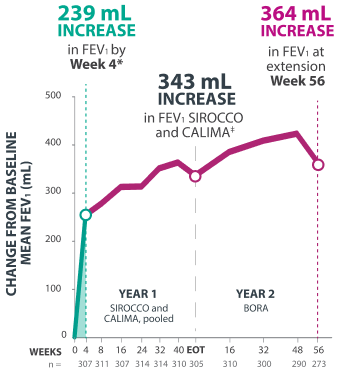
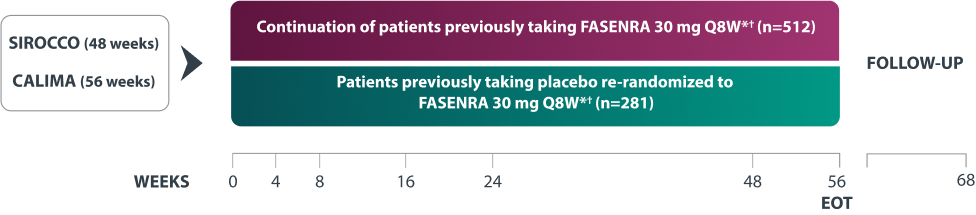
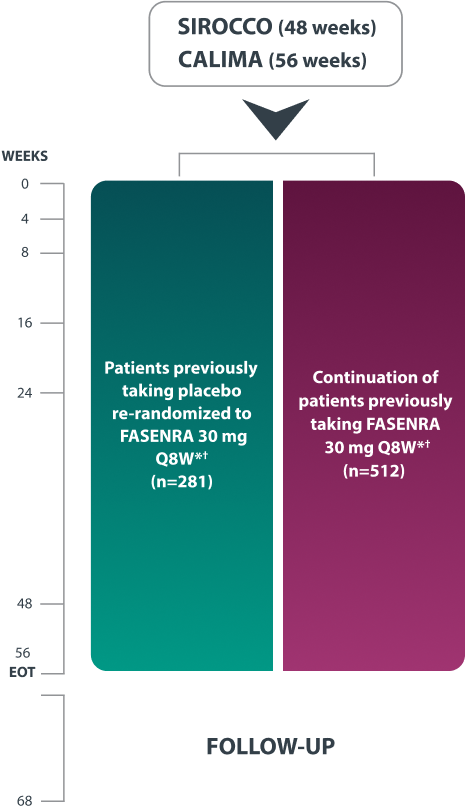
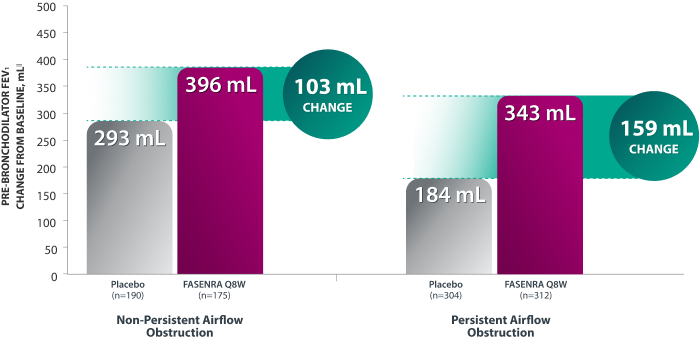
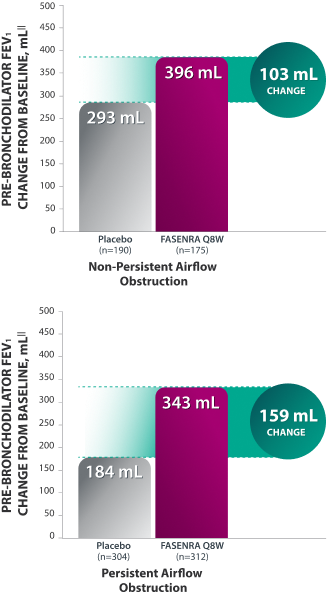
1. FASENRA® (benralizumab) [package insert]. Wilmington, DE: AstraZeneca Pharmaceuticals LP; September 2024. 2. Bleecker ER, FitzGerald JM, Chanez P, et al; SIROCCO study investigators. Efficacy and safety of benralizumab for patients with severe asthma uncontrolled with high-dosage inhaled corticosteroids and long-acting ß2-agonists (SIROCCO): a randomised, multicentre, placebo-controlled phase 3 trial. Lancet. 2016;388(10056):2115-2127. 3. FitzGerald JM, Bleecker ER, Nair P, et al; CALIMA study investigators. Benralizumab, an anti-interleukin-5 receptor α monoclonal antibody, as add-on treatment for patients with severe, uncontrolled, eosinophilic asthma (CALIMA): a randomised, double-blind, placebo-controlled phase 3 trial. Lancet. 2016;388(10056):2128-2141. 4. Busse WW, Bleecker ER, FitzGerald JM, et al; BORA study investigators. Long-term safety and efficacy of benralizumab in patients with severe, uncontrolled asthma: 1-year results from the BORA phase 3 extension trial. Lancet Respir Med. 2019;7(1):46-59. 5. FitzGerald JM, Bleecker ER, Bourdin A, et al. Two-year integrated efficacy and safety analysis of benralizumab in severe asthma. J Asthma Allergy. 2019;12:401-413. 6. Data on File, REF-19697, AZPLP. 7. Data on File, REF-59636, AZPLP. 8. Chipps BE, Hirsch I, Trudo F, et al. Benralizumab efficacy for patients with fixed airflow obstruction and severe, uncontrolled eosinophilic asthma. Ann Allergy Asthma Immunol. 2020;124(1):79-86. 9. Kaminska M, Foley S, Maghni K, et al. Airway remodeling in subjects with severe asthma with or without chronic persistent airflow obstruction. J Allergy Clin Immunol. 2009;124(1):45-51.e1-4. 10. Rutting S, Thamrin C, Cross TJ, King GG, Tonga KO. Fixed airflow obstruction in asthma: a problem of the whole lung not of just the airways. Front Physiol. 2022;13:898208.
1. Skolnik NS, Carnahan SP. Primary care of asthma: new options for severe eosinophilic asthma. Curr Med Res Opin. 2019;35(7):1309-1318. 2. Global Initiative for Asthma. 2025 GINA Report, Global Strategy for Asthma Management and Prevention. Accessed May 27, 2025. https://ginasthma.org/reports 3. Bleecker ER, FitzGerald JM, Chanez P, et al; SIROCCO study investigators. Efficacy and safety of benralizumab for patients with severe asthma uncontrolled with high-dosage inhaled corticosteroids and long-acting β2-agonists (SIROCCO): a randomised, multicentre, placebo-controlled phase 3 trial. Lancet. 2016;388(10056):2115-2127. 4. Tran TN, Zeiger RS, Peters SP, et al. Overlap of atopic, eosinophilic, and TH2-high asthma phenotypes in a general population with current asthma. Ann Allergy Asthma Immunol. 2016;116(1):37-42.
1. Data on File, US-94507, AZPLP.
1. FASENRA® (benralizumab) [package insert]. Wilmington, DE: AstraZeneca Pharmaceuticals LP; April2024 .
1. Data on File, REF-211303, AZPLP. 2. Jackson DJ, Pelaia G, Emmanuel B, et al. Benralizumab in severe eosinophilic asthma by previous biologic use and key clinical subgroups: real-world XALOC-1 programme. Eur Respir J. 2024;64(1):2301521. 3. Carstens D, Maselli DJ, Mu F, et al. Real-world effectiveness study of benralizumab for severe eosinophilic asthma: ZEPHYR 2. J Allergy Clin Immunol Pract. 2023;11(7):2150-2161.e4. 4. FASENRA® (benralizumab) [package insert]. Wilmington, DE: AstraZeneca Pharmaceuticals LP; September 2024. 5. Bleecker ER, FitzGerald JM, Chanez P, et al; SIROCCO study investigators. Efficacy and safety of benralizumab for patients with severe asthma uncontrolled with high-dosage inhaled corticosteroids and long-acting ß2-agonists (SIROCCO): a randomised, multicentre, placebo-controlled phase 3 trial. Lancet. 2016;388(10056):2115-2127. 6. Penz E, Rothe T, Dupont L, et al. Early and sustained asthma control and remission in real-world patients with severe eosinophilic asthma treated with benralizumab: XALOC-2. Clin Exp Allergy. Published online October 29, 2025. doi:10.1111/cea.70162 7. Penz E, Rothe T, Dupont L, et al. Early and sustained asthma control and remission in real-world patients with severe eosinophilic asthma treated with benralizumab: XALOC-2. Supplemental materials. Clin Exp Allergy. Published online October 29, 2025. doi:10.1111/cea.70162
1. FASENRA® (benralizumab) [package insert]. Wilmington, DE: AstraZeneca Pharmaceuticals LP; September 2024. 2. Bleecker ER, FitzGerald JM, Chanez P, et al; SIROCCO study investigators. Efficacy and safety of benralizumab for patients with severe asthma uncontrolled with high-dosage inhaled corticosteroids and long-acting ß2-agonists (SIROCCO): a randomised, multicentre, placebo-controlled phase 3 trial. Lancet. 2016;388(10056):2115-2127. 3. FitzGerald JM, Bleecker ER, Nair P, et al; CALIMA study investigators. Benralizumab, an anti-interleukin-5 receptor α monoclonal antibody, as add-on treatment for patients with severe, uncontrolled, eosinophilic asthma (CALIMA): a randomised, double-blind, placebo-controlled phase 3 trial. Lancet. 2016;388(10056):2128-2141. 4. Nair P, Wenzel S, Rabe KF, et al. Oral glucocorticoid–sparing effect of benralizumab in severe asthma. N Engl J Med. 2017;376(25):2448-2458. 5. Busse WW, Bleecker ER, FitzGerald JM, et al; BORA study investigators. Long-term safety and efficacy of benralizumab in patients with severe, uncontrolled asthma: 1-year results from the BORA phase 3 extension trial. Lancet Respir Med. 2019;7(1):46 -59. 6. Korn S, Bourdin A, Chupp G, et al. Integrated safety and efficacy among patients receiving benralizumab for up to 5 years. J Allergy Clin Immunol Pract. 2021;9(12):4381-4392.e4. 7. Menzies-Gow A, Gurnell M, Heaney LG, et al. Oral corticosteroid elimination via a personalised reduction algorithm in adults with severe, eosinophilic asthma treated with benralizumab (PONENTE): a multicentre, open-label, single-arm study. Lancet Respir Med. 2022;10(1):47-58. 8. Menzies-Gow A, Corren J, Bel EH, et al. Corticosteroid tapering with benralizumab treatment for eosinophilic asthma: PONENTE trial. ERJ Open Res. 2019;5(3):00009-2019. 9. Menzies-Gow A, Gurnell M, Heaney LG, et al. Adrenal function recovery after durable oral corticosteroid sparing with benralizumab in the PONENTE study. Eur Respir J. 2022;60(6):2103226. 10. Data on File, REF -211303, AZPLP. 11. Jackson DJ, Pelaia G, Emmanuel B, et al. Benralizumab in severe eosinophilic asthma by previous biologic use and key clinical subgroups: real-world XALOC-1 programme. Eur Respir J. 2024;64(1):2301521. 12. Carstens D, Maselli DJ, Mu F, et al. Real-world effectiveness study of benralizumab for severe eosinophilic asthma: ZEPHYR 2. J Allergy Clin Immunol Pract. 2023;11(7):2150-2161.e4. 13. Penz E, Rothe T, Dupont L, et al. Early and sustained asthma control and remission in real-world patients with severe eosinophilic asthma treated with benralizumab: XALOC-2. Clin Exp Allergy. Published online October 29, 2025. doi:10.1111/cea.70162 14. Penz E, Rothe T, Dupont L, et al. Early and sustained asthma control and remission in real-world patients with severe eosinophilic asthma treated with benralizumab: XALOC-2. Supplemental materials. Clin Exp Allergy. Published online October 29, 2025. doi:10.1111/cea.70162
1. FASENRA® (benralizumab) [package insert]. Wilmington, DE: AstraZeneca Pharmaceuticals LP; September 2024. 2. Korn S, Bourdin A, Chupp G, et al. Integrated safety and efficacy among patients receiving benralizumab for up to 5 years. J Allergy Clin Immunol Pract. 2021;9(12):4381-4392.e4. 3. Data on File, US-103275, AZPLP. 4. ClinicalTrials.gov [Internet]. National Library of Medicine (US). Identifier NCT00783289 ClinicalTrials.gov website. Accessed July 10, 2025. https://clinicaltrials.gov/ct2/show/NCT00783289
1. FASENRA® (benralizumab) [package insert]. Wilmington, DE: AstraZeneca Pharmaceuticals LP; September 2024. 2. Ferguson GT, Cole J, Aurivillius M, Roussel P, Barker P, Martin UJ; GRECO study investigators. Single-use autoinjector functionality and reliability for at-home administration of benralizumab for patients with severe asthma: GRECO trial results. J Asthma Allergy. 2019;12:363-373.
1. FASENRA® (benralizumab) [package insert]. Wilmington, DE: AstraZeneca Pharmaceuticals LP; April 2024. 2. Bleecker ER, FitzGerald JM, Chanez P, et al; SIROCCO study investigators. Efficacy and safety of benralizumab for patients with severe asthma uncontrolled with high-dosage inhaled corticosteroids and long-acting ß2-agonists (SIROCCO): a randomised, multicentre, placebo-controlled phase 3 trial. Lancet. 2016;388(10056):2115-2127. 3. FitzGerald JM, Bleecker ER, Nair P, et al; CALIMA study investigators. Benralizumab, an anti-interleukin-5 receptor α monoclonal antibody, as add-on treatment for patients with severe, uncontrolled, eosinophilic asthma (CALIMA): a randomised, double-blind, placebo-controlled phase 3 trial. Lancet. 2016;388(10056):2128-2141.