

The NATRON clinical trial was a 24-week, randomized, double-blind, placebo-controlled, Phase 3 study comparing the efficacy and safety of FASENRA to placebo in patients aged 12 years and older who had signs or symptoms of HES flare or had experienced at least 2 HES flares within the past 12 months.1,2 See the full study design.
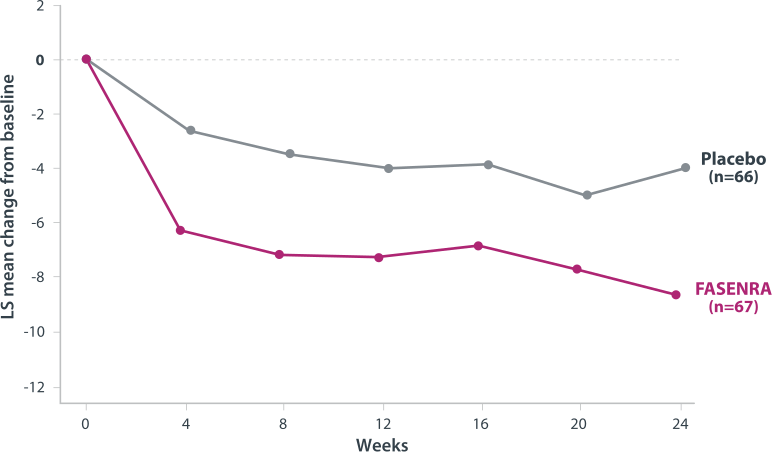
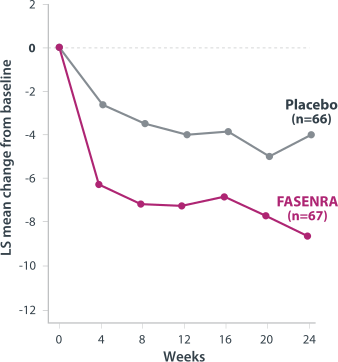
Secondary endpoint: Change in fatigue-related symptoms and impacts from baseline to Week 24 (PROMIS Short Form 7a)1,2
LS mean change difference from baseline at Week 24: -4.72 (95% CI: -7.64 to -1.80; P=0.0017)*
MCID for PROMIS Fatigue in this setting is not defined. Reported values reflect statistical differences only.
~2X greater reduction in fatigue with FASENRA compared to placebo*
Fatigue was measured by a change in the PROMIS Fatigue short-form 7A standardized T-score, which can range from 29.4 (lowest level of fatigue) to 83.2 (highest level of fatigue). A decrease in PROMIS Fatigue score indicates improvement in fatigue.


*LS mean change from baseline in PROMIS Fatigue score at Week 24: FASENRA -8.6 (95% CI: -10.6, -6.6) vs placebo -3.9 (95% CI: -6.0, -1.8).2
CI, confidence interval; LS, least squares; MCID, minimal clinically important difference; PROMIS, patient-reported outcomes measurement information system.


